Is Your Front End Keeping Up with Your Back End?
Seasonal valleys do not have to control a fabrication business. Learn how to calculate the demand your shop needs, work backward through the sales funnel, and align marketing timing with the capacity of the Design Constraint.
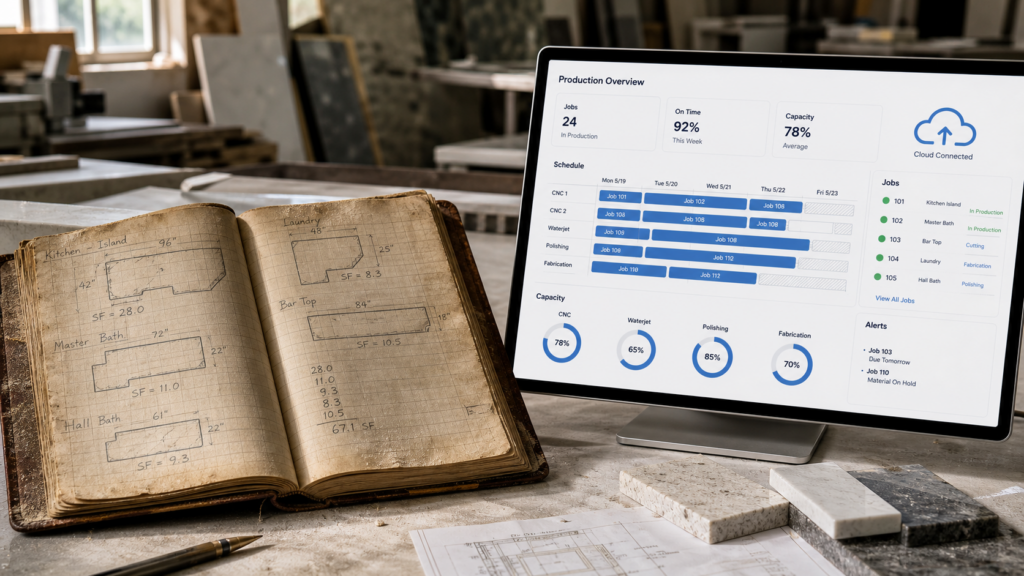
Why Square Feet Is a Poor Scheduling Metric for Countertop Fabricators
Two 40-square-foot kitchens can consume very different amounts of capacity and create very different economic results. Square feet is useful for estimating material and volume, but not as the operating goal.

Throughput Accounting for Stone Fabricators: T$, OE, Net Profit, and Better Decisions
Throughput Accounting gives operating leaders a fast financial language for deciding what to schedule, where to improve, and whether added sales will produce added profit.
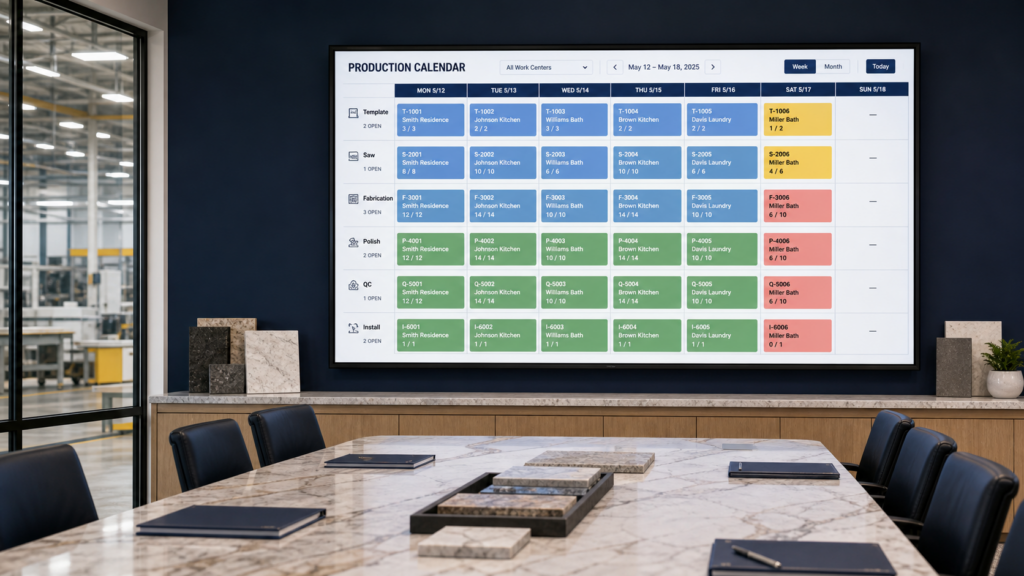
Synchronous Flow for Countertop Fabricators: From Changing Schedules to Daily Control
Custom fabrication is variable by nature, but the business does not have to be chaotic. Synchronous Flow gives sales, project management, production, installation, and leadership one operating logic.

Throughput Accounting vs. Traditional Cost Accounting
Financial statements report results; Throughput Accounting helps managers understand how operating decisions create those results.

Production Efficiency vs. Business Profitability
A busy shop can produce more pieces while the company generates less cash and less profit.

How Synchronous Flow Connects Operational and Financial Decisions
Operational, financial, and leadership problems are often different views of the same system condition.

What Do You Do When Your Production Constraint is Physical Space?
Learn how to manage floor space as a true system constraint without defaulting immediately to expansion or new equipment.

Is Sales Really the Constraint in Your Business?
More leads will not fix every sales problem. Learn how to map the flow from lead to confirmed order, identify the true constraint, protect scarce sales capacity, and connect demand with the needs of the shop.

Throughput (T$) Scheduling: Set a Daily Profit Target and Reduce Production Chaos
Learn how to convert Operating Expense and desired Net Profit into a daily Throughput target, then build a feasible production schedule around readiness and constrained capacity.
Writing for You