
How to Build a Countertop Shop Management Team That Solves Problems Together
Capable managers can spend their days rescuing the work or build a business that improves without constant heroics. This case shows what changed when one countertop fabricator gave its managers a shared way to see flow and solve problems together.

How Countertop Fabrication Shop Owners Can Delegate More Clearly
A customer problem looked ignored, but the manager was solving more than the owner could see. Clear delegation separates today’s recovery from tomorrow’s system improvement.

How Countertop Fabricators Can Protect Profit When Sales Slow
When sales slow, current expense can outrun the Throughput available to support it. Use expected Throughput and target profit to define affordable operating expense, then reduce cost without damaging flow.

EBITDA Is Up, but Cash Is Tight: What Countertop Fabricators Should Track
EBITDA can improve while payroll pressure and cash constraints get worse. Rick Phelps explains which financial measure should lead in survival, growth, and sale or refinancing decisions.

Why Countertop Fabrication Shops Lose Margin as They Grow
The technology that helped build a fabrication business can eventually bury it in complexity. The next stage of profitable growth requires a better way to judge every investment.

Are You and Your Team Learning Every Day?
A busy team is not necessarily a learning team. Learn how stone fabricators can turn recurring problems into better operating knowledge, stronger managers, and a system that improves from what happens each day.
Is Your Front End Keeping Up with Your Back End?
Seasonal valleys do not have to control a fabrication business. Learn how to calculate the demand your shop needs, work backward through the sales funnel, and align marketing timing with the capacity of the Design Constraint.
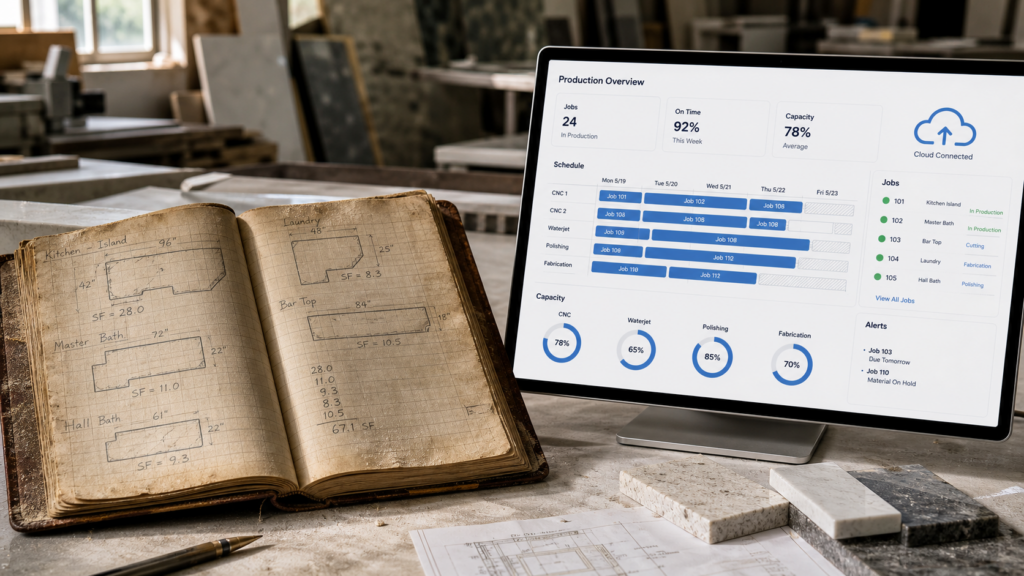
Why Square Feet Is a Poor Scheduling Metric for Countertop Fabricators
Two 40-square-foot kitchens can consume very different amounts of capacity and create very different economic results. Square feet is useful for estimating material and volume, but not as the operating goal.

Throughput Accounting for Stone Fabricators: T$, OE, Net Profit, and Better Decisions
Throughput Accounting gives operating leaders a fast financial language for deciding what to schedule, where to improve, and whether added sales will produce added profit.
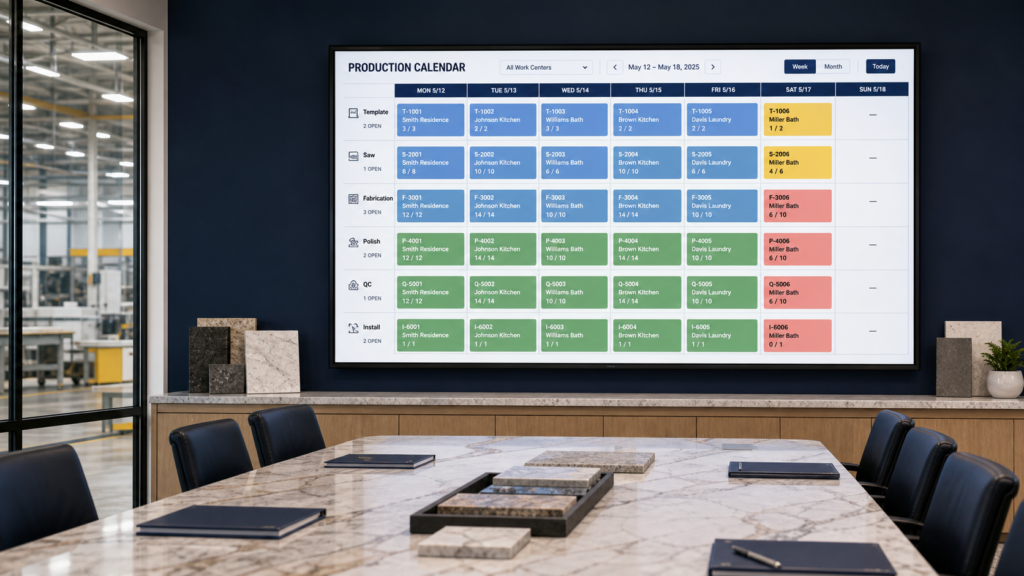
Synchronous Flow for Countertop Fabricators: From Changing Schedules to Daily Control
Custom fabrication is variable by nature, but the business does not have to be chaotic. Synchronous Flow gives sales, project management, production, installation, and leadership one operating logic.
Writing for You