SyFOS · Synchronous Flow Operating System
Run Synchronous Flow every day.
SyFOS stands for Synchronous Flow Operating System. Its supporting software connects the financial goal and required Throughput Dollars (T$) to the daily schedule, makes work-order risk visible before delivery is threatened, and gives your management team a disciplined way to improve the business continuously.
A configured operating system for the team, not another generic scheduling app.
The essential distinction
The software makes Synchronous Flow visible.
SyFOS stands for Synchronous Flow Operating System. Its configurable software is the shared environment where the operating system’s measures, rules, roles, and management cadence become visible. It shows what the business must produce, which work is ready, what should happen today, where delivery is at risk, and which obstacle deserves the next improvement effort.
Synchronous Flow remains the larger capability. It supplies the economic logic and focusing disciplines; SyFOS carries the signals across the business so managers can focus on the constraint, the promise at risk, or the decision that matters now.
The operating system is bigger than the software. The real product is a management team that can see, decide, act, and improve together.Synchronous Flow
The Goal, T$, constraints, buffers, focusing rules, and management disciplines.
Management cadence
Roles, meetings, decision rights, escalation, and follow-through.
SyFOS
The configurable environment where risk, priorities, commitments, and operating evidence become shared.
SFIT
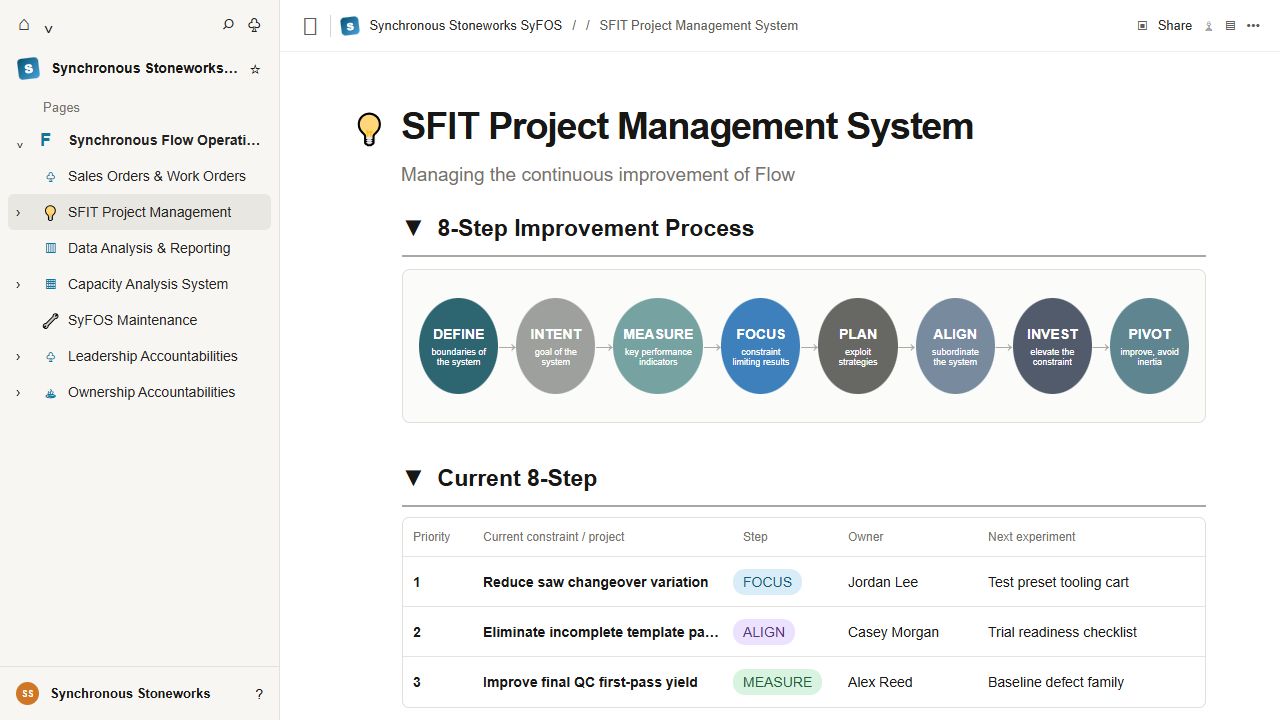
The Synchronous Flow Improvement Team owns system maintenance, operational learning, and improvement follow-through.
The management rhythm
One connected sequence from the financial goal to the next improvement.
SyFOS makes the handoffs visible without asking every manager to use every view.
- 01Set the daily T$ target
- 02Release only ready work
- 03See threats and holes early
- 04Protect delivery
- 05Improve the current constraint
A guided product view
See the decisions the system is built to support.
These views mirror the current SyFOS workspace structure used across recent fabrication installations. Every company, person, work order, date, and value is fictional.
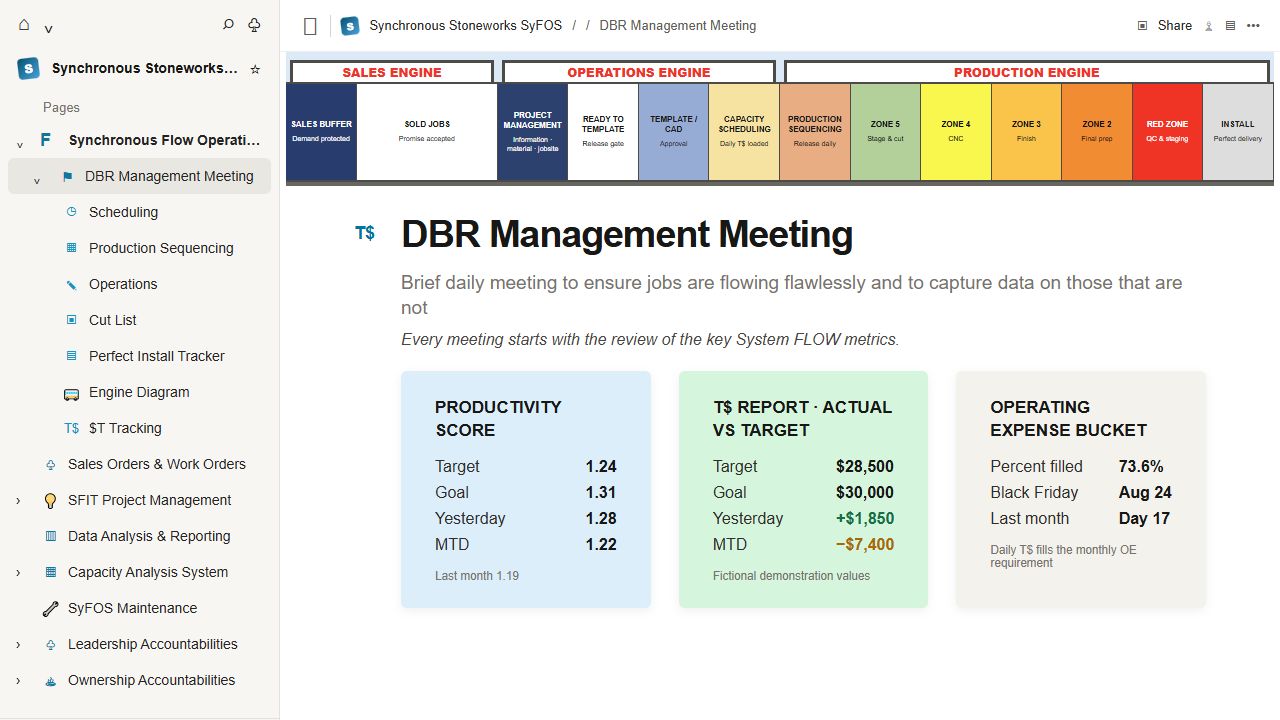
01 Know the score
Begin with the financial result the system exists to produce.
Daily T$ and the Productivity Score make the economic requirement visible before the team discusses activity. The question becomes, “Did the flow deliver what the goal required?”
Decision enabled: Adjust the mix, capacity, or response before the shortfall becomes a monthly surprise.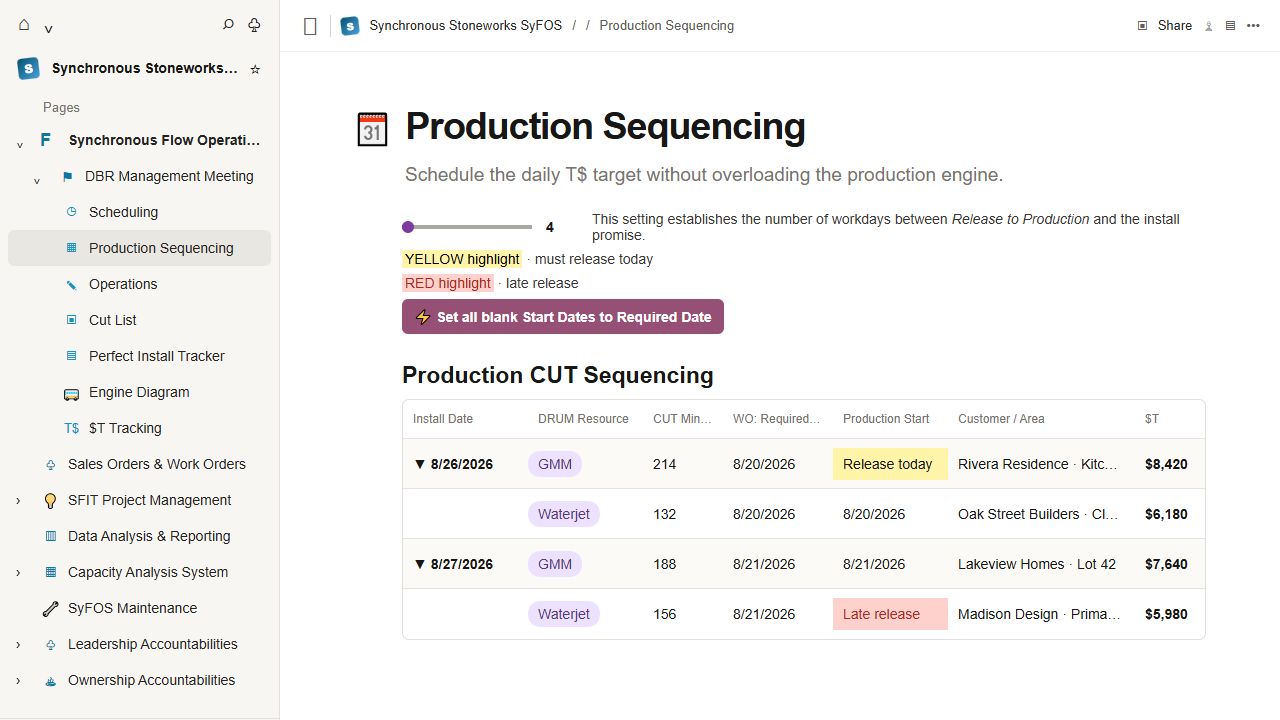
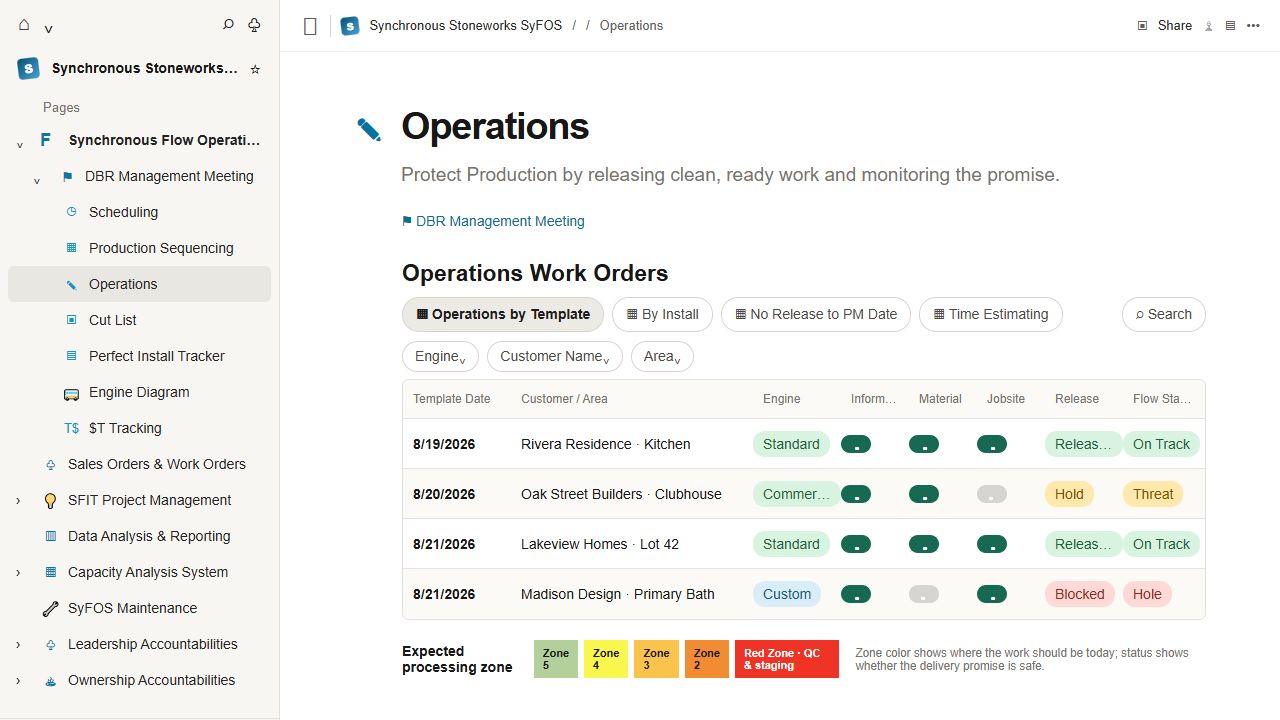
All work orders, people, companies, and financial values shown above are fictional. No client information is displayed.
How SyFOS fits your technology
Give the operating layer a shared digital home.
Your ERP can remain the authoritative source for customers, quotes, orders, work orders, and transactions. SyFOS makes the information required to coordinate the enterprise around Throughput, readiness, capacity, risk, and improvement visible in one management environment.
The exact data flow is configured to the client’s environment. The goal is useful management visibility, not another disconnected place to maintain information for its own sake.
How it becomes yours
Configure the tool. Integrate the work. Embed the thinking.
Software setup is only the first layer. The operating capability exists when managers understand the signals, perform the work, and improve the system without waiting for a consultant.
Put the operating tools into use.
Configure the client’s engines, work orders, constraints, readiness rules, T$ measures, roles, meetings, and required views.
Evidence: the team is using SyFOS in live work.Make the work part of management roles.
Clarify who maintains the information, leads each meeting, responds to each signal, owns each decision, and follows through.
Evidence: the system is no longer consultant-dependent.Make Synchronous Flow part of the culture.
Leadership reinforces the goal, managers use the common logic, and the SFIT keeps the organization focused on the next constraint.
Evidence: the business keeps learning as conditions change.Availability and investment
SyFOS is normally introduced with the operating disciplines that make it valuable.
It is not positioned as a self-install software license. The workspace is configured around the flow, roles, constraints, measures, and management rhythms established through a supported program.
SyFOS configuration and operating use are part of the four-month Synchronous Flow Installation. The software supports the transfer from installation into ongoing management.
See Installation scope and investment →The current annual software renewal keeps the configured SyFOS workspace active. Consulting, flow-management support, custom development, training, and other ongoing support are scoped separately.
Talk through ongoing support →Qualifying StoneSync Pro or other supported engagements may include elements of Synchronous Flow and SyFOS. We will identify the sensible route before recommending a larger commitment.
Compare starting points →Common questions
What leaders ask when they first see SyFOS.
What is SyFOS?
SyFOS stands for Synchronous Flow Operating System. Its configurable supporting software makes the larger operating system visible by connecting the financial goal and required Throughput Dollars to daily scheduling, controlled work release, production flow, exception management, capacity decisions, and structured continuous improvement.
Does SyFOS replace our ERP?
No. Your ERP remains the system of record for quoting, orders, customers, and transactions. SyFOS gives the Synchronous Flow operating layer a shared digital home and turns the required information into coordinated management decisions. The exact exchange of information depends on the client’s current technology and implementation scope.
Is this just scheduling software?
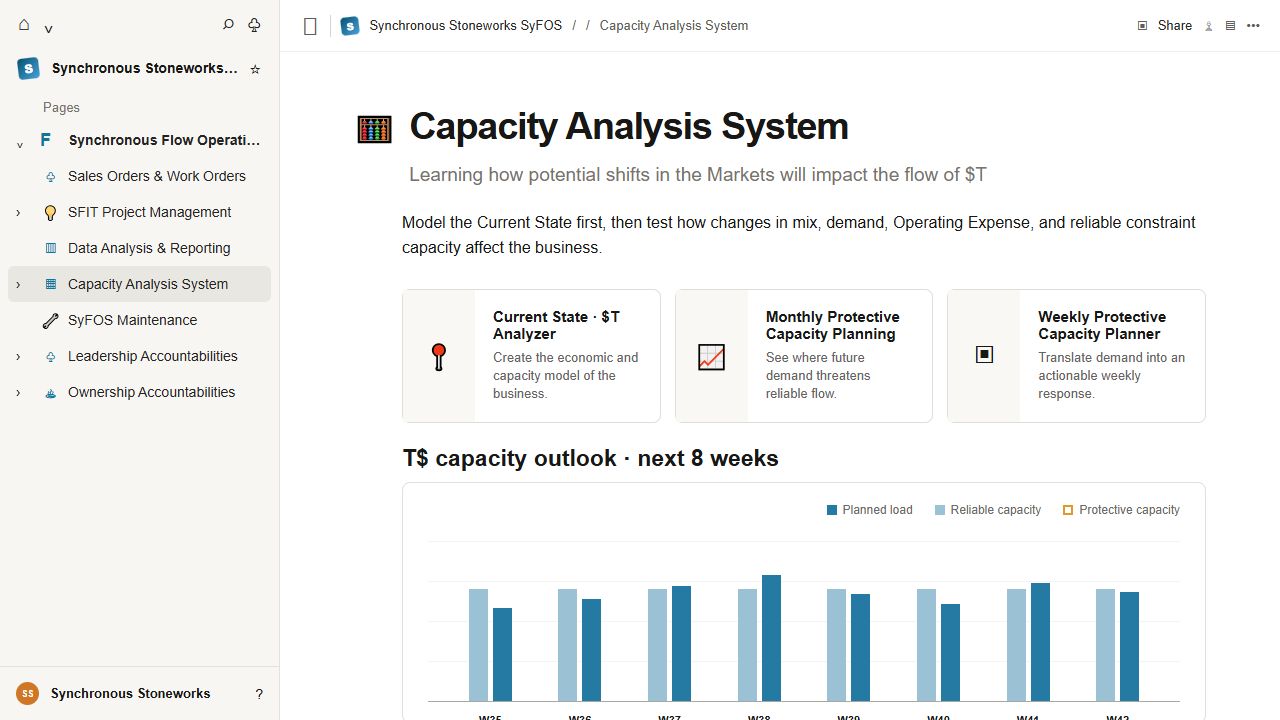
No. Scheduling is one important part. SyFOS also supports daily T$ performance, readiness and release, WIP control, constraint performance, buffer health, work-order risk, install quality, flow disruptions, capacity analysis, role accountability, and SFIT improvement work.
Who uses SyFOS?
Owners, general managers, project managers, production planners, production leaders, finance leaders, and the Synchronous Flow Improvement Team (SFIT) use role-appropriate views. Not everyone needs every screen, but everyone works from the same operating logic and economic goal.
What is the SFIT?
SFIT stands for Synchronous Flow Improvement Team. It is the cross-functional operational-intelligence group that keeps the system maintained, assures useful data is entered and analyzed, manages improvement projects to completion, and sets the capacity roadmap. The SFIT helps the business stay proactive about existing and emerging bottlenecks, preserve protective capacity at non-constraints, and guide utilization and investment at the design constraint.
Is SyFOS included in a Synchronous Flow Installation?
Yes. The first 12 months are included in a direct Synchronous Flow Installation. The current annual software renewal after the included period is $2,400. Consulting, coaching, and other ongoing support are scoped separately.
Can we buy it as a self-install scheduling application?
SyFOS is normally configured and introduced through a Synchronous Flow Installation or another qualifying supported program. Its value comes from pairing the software with the measures, operating rules, roles, and management rhythms that make its signals useful.
Is every SyFOS workspace identical?
No. The core Synchronous Flow logic remains consistent, while engines, constraints, pipelines, readiness rules, roles, views, reporting, and data movement are configured to the operating reality of each client.