Less chaos. More room to lead.
What is Synchronous Flow?
You want a business that keeps its promises, rewards the people who build it, and gives you room to lead. When every day brings another urgent problem, that future can feel out of reach. Synchronous Flow helps your team work toward it together.
A shared direction for improvement
Help the whole business become what you want it to be.
Synchronous Flow is an eight-step improvement framework. It starts by defining the system, agreeing on its purpose, and choosing evidence of progress. That clarity gives the work of improvement a direction—and keeps it connected to what matters as conditions change.
We apply it to your whole business: the value you create for customers, the experience of your team, and the return and quality of life it provides for ownership, now and in the future.
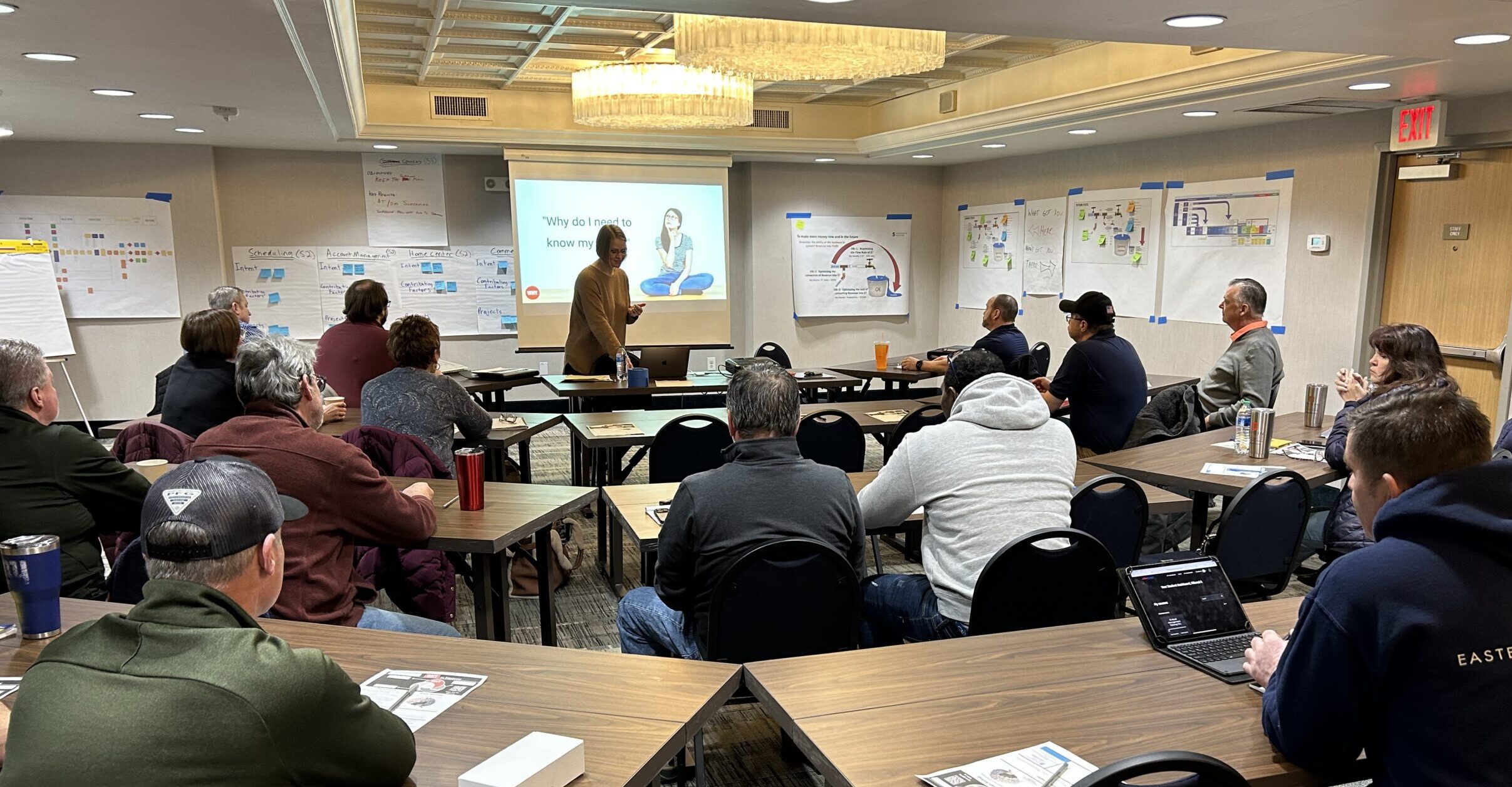 Built in real operations with the people responsible for running them.
What clients experienced
A better business can change your life outside it, too.
“Our business is running better than it ever has. Synchronous Flow manages the complexity and tames the resulting chaos.”Vincent Trento, Owner · Rumford Stone, Inc.
“They helped us realize the profits we knew we could always make. Synchronous Solutions helped us increase our net profit by triple.”Alex Bazdar, CEO · Classic Rock Fabrication
“While our profits certainly increased, the biggest change has been the quality of life and the removal of chaos.”Todd Officer, Owner · Intellistone
One system from demand to cash
Synchronous Flow cannot belong to production alone.
Sales, project management, operations, production, installation, invoicing, and improvement are parts of the same flow. A decision that helps one department can still make the whole business slower, less reliable, or less profitable.
Sell work the system can serve well.
Pricing, product mix, and market focus must reflect Throughput and how each kind of work uses constrained capacity.
Protect production from unready work.
Project management completes the information, material, approvals, and site-readiness work required before a job enters production.
Finish the promise, then learn from it.
Production, installation, invoicing, callbacks, and exceptions reveal whether the system produced the intended customer and financial result.
Improve the flow of the whole business, even when that means a non-constraint resource is not busy every minute.
The central idea
The whole system cannot move faster than the condition that governs its flow.
Most organizations manage departments, people, and equipment as if maximizing every local activity will maximize the enterprise. It does not. Local efficiency can create more work in process, longer lead times, conflicting priorities, and more pressure on the constraint.
Synchronous Flow makes the governing condition visible and aligns the rest of the organization to support it. That changes the question from “How do we keep everything busy?” to “How do we protect and increase the rate at which the whole system achieves its goal?”
The eight-step framework
Keep improvement connected to the future you want.
The first three steps establish what improvement means. The remaining five build on Goldratt’s Theory of Constraints focusing steps. Together, they keep effort connected to the result you actually want.
Define
Agree on the system we are improving, its boundaries, and what belongs within it. See the whole before optimizing individual parts.
Intent
Clarify its purpose. For a business, that includes value for customers, the team, and ownership, alongside making money now and in the future.
Measure
Choose evidence that shows whether the system is fulfilling its intent. Connect the goal to what people can observe, track, and act on.
Focus
Identify the constraint that most limits progress toward that intent. Find where attention can make a meaningful difference to the whole.
Plan
Make the most of the constraint with what you already have. Build a practical plan to remove distractions and wasted capacity.
Align
Give everyone a shared direction. Coordinate the other parts of the system to support that plan, even when individual targets need to change.
Invest
When more is needed, add the people, capacity, tools, or other resources that will help the whole system go further.
Pivot
Keep learning as conditions change. Reconsider the boundaries, purpose, measures, and plan with a fresh perspective, so the system can adapt and endure.
You bring the realities of your business. We help you and your team apply the framework and carry improvement through.
The economic connection
Throughput gives operating decisions a common financial language.
The purpose is not merely smoother work. It is to help the organization generate more money through sales while managing operating expense and investment responsibly.
What must today produce?
Build the work-order mix around the throughput target rather than job count, square footage, or utilization alone.
Which choice helps the whole?
Evaluate jobs, mix, capacity, investment, and improvement through their effect on the constraint and total throughput.
What keeps blocking the goal?
Use actual flow and exception data to keep the improvement agenda tied to what is currently governing performance.
How the operating system stays alive
The team manages flow every day and improves the system over time.
The installation establishes the rules and structure. SyFOS, the SFIT, management follow-through, ongoing support, and training keep the business learning and growing.
Flow management
Schedule T$, protect release, monitor job position and risk, and decide where intervention is economically justified.
System improvement
Use the SFIT to examine evidence, attack causes, test countermeasures, and update standards as constraints move.
Business building
Use advisory support, training, and management coaching to keep strategy, plans, accountability, and management-team iterations active.
Concepts in plain language
A small Synchronous Flow glossary.
Throughput Dollars (T$)
Sales revenue minus truly variable expense. The daily T$ target translates Operating Expense and desired Net Profit into the amount the schedule must produce each workday.
Operating Expense (OE)
The money the organization spends to turn investment into Throughput. OE and desired Net Profit establish the daily T$ requirement.
Net Profit (NP)
Throughput minus Operating Expense. Desired Net Profit makes the economic goal explicit before the team builds the schedule.
Constraint
The condition that currently governs the total output of the system. Improving elsewhere may create activity without improving the whole.
Buffer
A mechanism for protecting flow and making the condition of promises visible. In fabrication, processing zones show where jobs should be by day.
Synchronous Flow Improvement Team (SFIT)
The cross-functional operational-intelligence group that maintains the system, assures useful data is captured and analyzed, manages improvement projects to completion, and sets the strategic roadmap for protective capacity and design-constraint decisions.
Common questions
What leaders usually want to clarify.
Is Synchronous Flow the same as scheduling software?
No. Synchronous Flow is the eight-step improvement framework. SyFOS, the Synchronous Flow Operating System, supports its business application by making shared measures, priorities, and improvement work visible.
Is Synchronous Flow only for stone fabricators?
No. The framework can guide improvement in any system with a purpose that needs to adapt and endure. Our work applies it to businesses; stone countertop fabrication is our current primary market.
What are Throughput Dollars in Synchronous Flow?
Throughput Dollars, or T$, are sales revenue minus truly variable expense. The daily T$ target translates Operating Expense and desired Net Profit into the amount the schedule must produce each workday.
Does the constraint stay in the same place?
Not necessarily. As the team improves one condition, demand changes, or the business grows, the governing constraint can move. That is why Synchronous Flow is an ongoing management discipline rather than a one-time project.