
The Management Operating Rhythms Behind Synchronous Flow
An operating system survives only when managers repeatedly use it to see, decide, act, and learn.
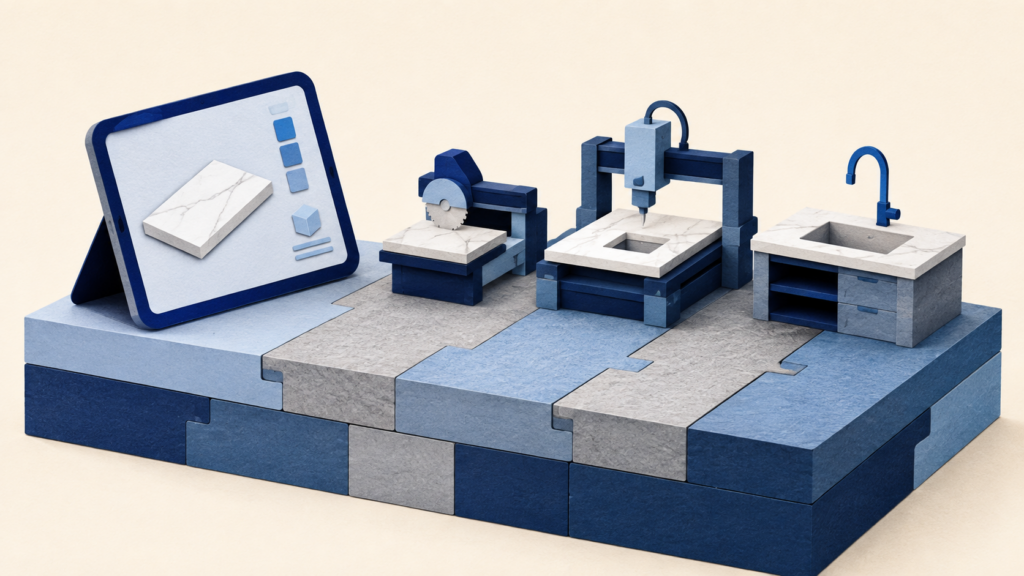
Why Technology Alone Does Not Scale a Fabrication Company
Technology can increase local capability without increasing the performance of the enterprise.

How to Build an Owner-Independent Fabrication Business
Owner independence is not achieved by asking the owner to step away before the organization can see and manage the business.

How Sales and Estimating Affect Flow and Profitability
Sales cannot be managed independently of the capacity, readiness, and economics of the system expected to fulfill the promise.

Consulting, Coaching, and Software
Synchronous Solutions is not accurately described by any one label such as consultant, coach, trainer, or software provider.

Production Efficiency vs. Business Profitability
A busy shop can produce more pieces while the company generates less cash and less profit.

Synchronous Flow vs. ERP Software
An ERP can store and move information, but technology cannot decide which operating rules should govern the business.

Synchronous Flow vs. Lean Manufacturing
Lean and Synchronous Flow share important aims, but they begin with different organizing questions.

What Does Global Optimization Mean in a Fabrication Business?
A department can improve its own metric while making the overall business less profitable and less reliable.

Synchronous Flow Is More Than Production Scheduling
Production scheduling cannot stabilize a business when the functions surrounding production continue to send conflicting signals.
Writing for You