Industry relationships, emerging technologies, and the lessons that help fabrication businesses move forward.
By Mark Phelps | Synchronous Solutions
There’s something valuable about being in a room full of people who understand the challenges you’re facing.
Not just people who work in the same industry, but people who have confronted similar problems, tried different solutions, made mistakes, and are willing to share what they’ve learned.
That’s what I appreciate about Rockheads.
We’ve been involved with the organization for many years as sponsors and vendor partners through Synchronous Solutions. We’ve watched clients join the community, develop relationships, and benefit from the experiences of other successful fabricators.
Our recent trip to Portland, Oregon, was another reminder of why those relationships matter.
More Than a Conference
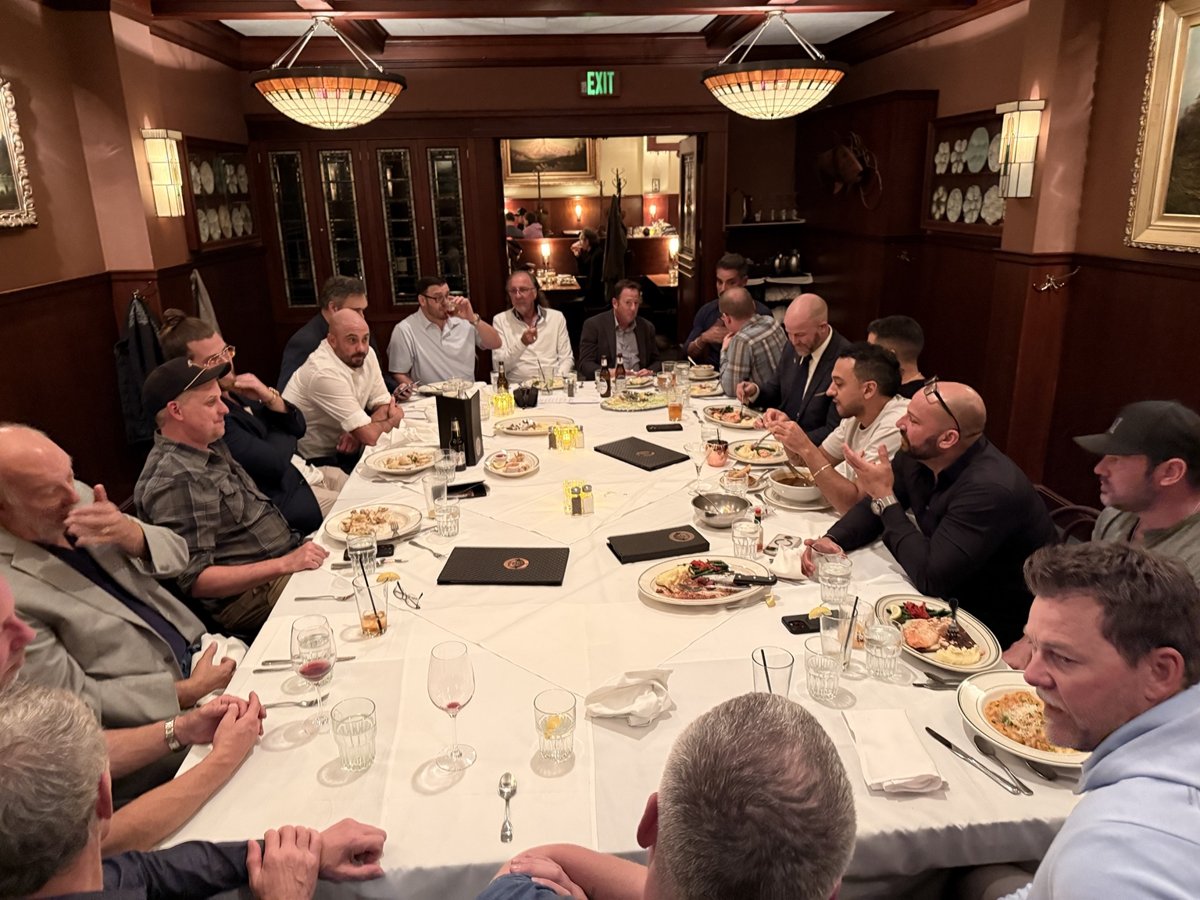
Before the main event, we partnered with Kaplan Consulting to host a private dinner and morning workshop with fellow fabricators.
Those smaller gatherings created opportunities for conversations that don’t always happen during formal presentations. People could talk openly about the challenges they’re facing, compare approaches, and explore ideas with others who understand their businesses.
Throughout the event, Rick and I connected with more than 30 fabricators and numerous industry partners, including longtime collaborators and new relationships.
What stands out to me about Rockheads is the willingness of members to help one another.
Someone mentions a challenge they’re facing, and often another fabricator has already worked through something similar. Rather than keeping that experience to themselves, they share what worked, what didn’t, and what they would do differently.
That willingness to share can save another business months of frustration and costly trial and error.
And sometimes the most valuable conversation happens between sessions, over dinner, or while walking through someone else’s facility.
Seeing What’s Possible at Precision Countertops
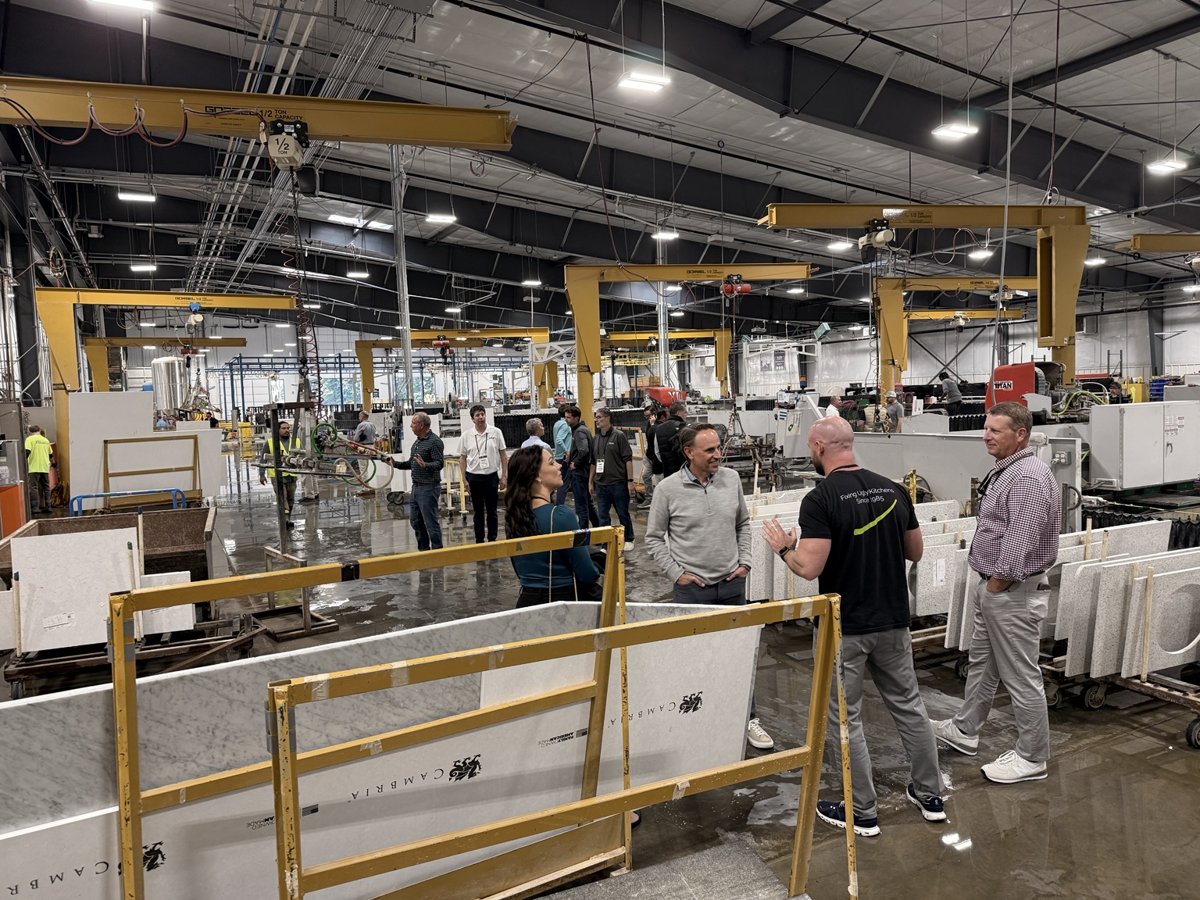
One of the highlights of the Portland gathering was the opportunity to visit Precision Countertops.
Precision is one of the industry’s larger fabrication operations, and seeing its facility firsthand gave attendees an opportunity to observe how equipment, people, processes, and technology come together at scale.
It’s one thing to hear about a production approach in a presentation. It’s another to stand inside a working operation and see how it functions.
For owners and leaders, experiences like this can expand their sense of what’s possible.
You might leave with a new idea about material handling, production flow, equipment utilization, or how to organize your team. Or you might simply gain a better appreciation for what it takes to coordinate a complex operation.
The value isn’t necessarily in copying what another shop does.
It’s in understanding the thinking behind their decisions and considering what might apply to your own business.
Porcelain: Learning to Adapt Without Sacrificing Profitability
I had the opportunity to participate in a panel discussing porcelain and the industry’s movement toward new materials and applications.
Much of the conversation centered on the technical challenges of working with porcelain. Different materials require different approaches to cutting, handling, tooling, and fabrication. What works for granite or quartz doesn’t necessarily translate directly to porcelain.
My contribution focused on two questions: How do we help our teams become proficient with unfamiliar materials? And how do we protect the economics of the business while they learn?
The first requires intentional leadership.
When introducing a new material, give your team access to established best practices, knowledgeable suppliers, and experienced fabricators who have already worked through the learning curve.
But don’t assume everything will go according to plan.
People need opportunities to practice, make mistakes, and develop proficiency. Whenever possible, use slower production periods to create that learning capacity rather than introducing unfamiliar processes when the shop is already operating at its limits.
The second question is economic.
Fabricators understandably worry about what happens to production flow when their material mix changes. But measuring square feet produced or comparing fabrication times doesn’t tell the whole story.
We need to understand how much Throughput each job contributes and how quickly that Throughput moves through the business relative to its limiting capacity.
At Synchronous Solutions, we use a metric called Octane, which measures Throughput per constraint minute.
Some of the shops we work with have been studying their Octane by material type. They’re finding that as their teams gain experience and refine their processes, porcelain’s economic performance is improving and, in some cases, approaching that of quartz.
That doesn’t mean every material performs the same way, or that every shop will see identical results.
It means fabricators can make better decisions when they understand the economics of their particular operations.
As their product mix changes, they can adjust capacity, pricing, production expectations, and sales targets to protect profitability.
The broader lesson extends beyond porcelain.
Whenever we introduce something new, we need to plan for both the opportunity and the learning curve.
And when we share what we’re learning with one another, the entire industry can make that transition more effectively.
AI: Move Fast to Learn, but Be Careful What You Automate
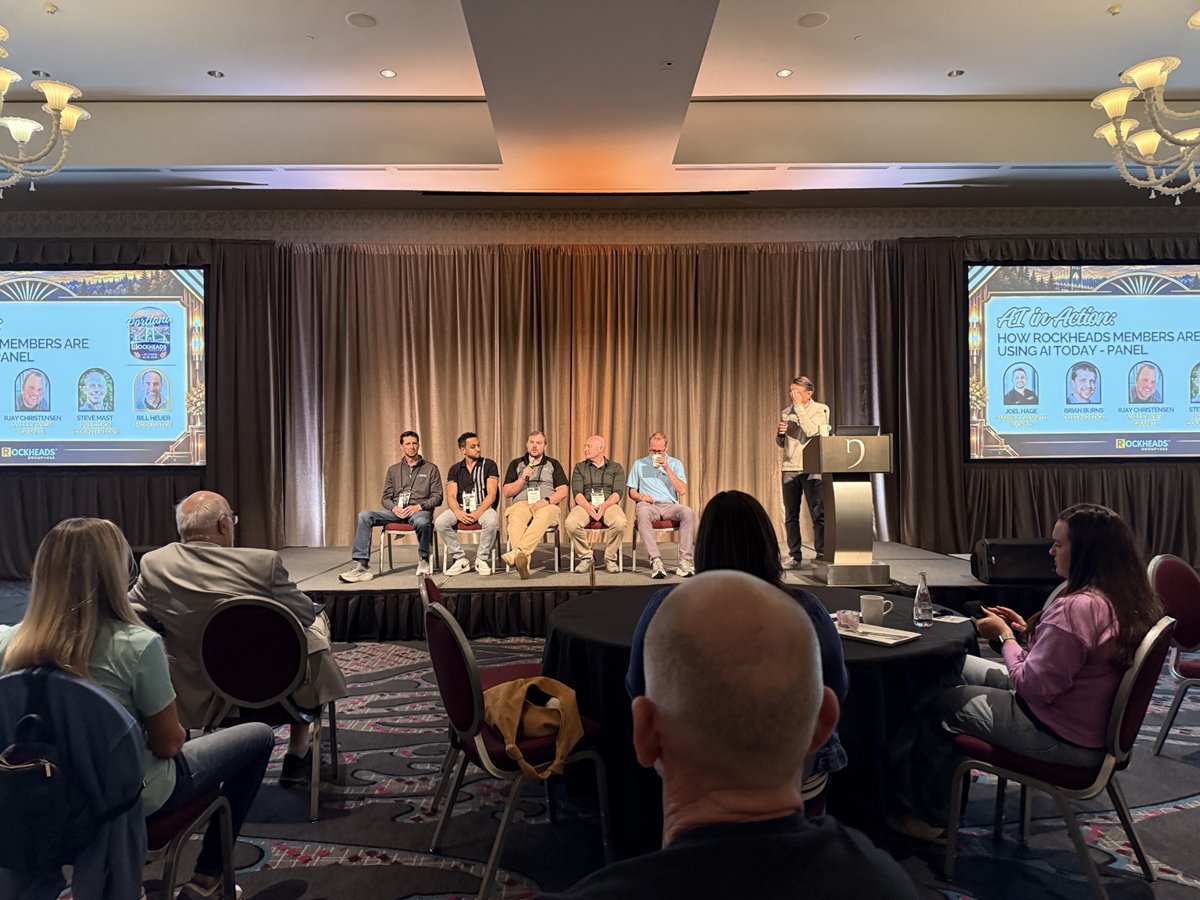
There was a lot of conversation about artificial intelligence throughout the event, both on stage and off.
Some fabricators shared tools they’re already using. Others talked about experiments, unexpected discoveries, mistakes, and the occasional frustrating experience of an AI tool confidently producing something that wasn’t true.
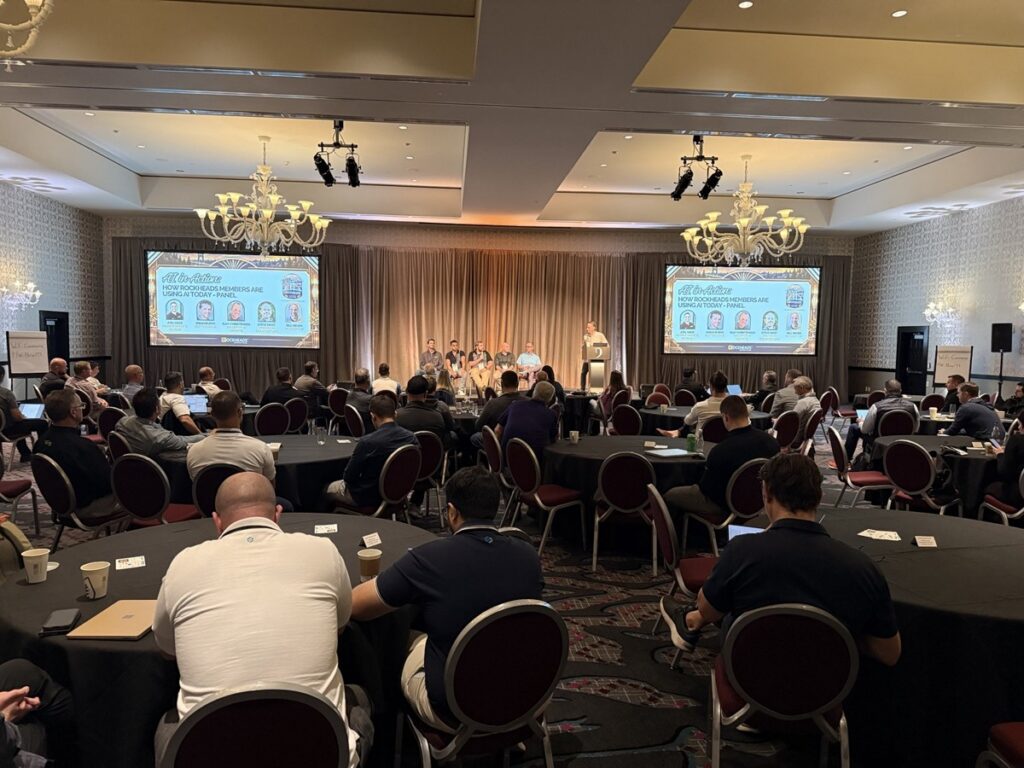
One session featured Rockheads members discussing practical applications, including management dashboards, inventory analysis, commercial estimating, software integrations, and production-related tools.
It was encouraging to see how much experimentation is already happening.
And my biggest takeaway was this: Move forward as quickly as you can in learning how to use AI to build useful things for your business. But be much more cautious about making AI a critical part of an automated process.
There’s a meaningful difference between using AI to help create a tool and allowing AI to operate that tool without sufficient oversight.
When AI helps someone develop an application, analyze a problem, or build a dashboard, it can dramatically accelerate learning and productivity.
But when AI becomes responsible for interpreting information, filling in missing details, or making decisions inside an automated workflow, the consequences of its mistakes become more serious.
AI can perform impressively much of the time and still produce fabricated information, overlook important context, or make errors that aren’t immediately obvious.
Imagine a customer proposal that looks polished and professional but contains an invented specification or an incorrect commitment. If nobody catches the mistake before it goes out, the business owns the consequences.
That’s not a reason to avoid AI.
It’s a reason to understand where human judgment and verification are essential.
I would encourage every fabrication business to give its people opportunities to experiment with AI, learn to build applications, and discover new ways to improve their work.
Just be deliberate about which decisions you automate, what safeguards you establish, and where a qualified person needs to remain accountable.
The technology is moving quickly. We should be learning quickly, too.
But speed of learning and speed of delegation are two very different things.
Before Planning for 2027, Listen to Your Customers
Darlene Campagna from Direct Opinions gave a presentation challenging fabricators to look outside their own organizations as they prepare for the coming year.
The message was straightforward: don’t build your growth strategy entirely around assumptions about what your customers want.
Ask them.
Customers may be responding differently to changing market conditions. Some are focused on growth. Others are trying to contain costs or manage uncertainty.
Understanding those differences can influence decisions about pricing, staffing, capacity, technology, and service.
The presentation also explored the importance of comparing what customers consider important with how well a business performs against those expectations.
For example, a fabricator may believe its next investment should be in expanding product selection, while customers may be far more concerned about lead times and communication.
Without asking, it’s easy to invest in improving the wrong thing.
Another opportunity discussed was increasing the share of business earned from existing customers. Sometimes meaningful growth is available within relationships a company already has, provided it understands what prevents those customers from buying more.
The larger lesson is to gather evidence before committing resources.
Everyone in the Room Has Something to Teach
One of my favorite parts of events like Rockheads is getting to know the people beyond their job titles and company names.
You can walk up to someone thinking you know what they do, only to discover that they have an incredible depth of experience in something you never would have expected.
Maybe they’ve built several successful businesses. Maybe they’ve developed an unusual technical skill. Maybe they’ve spent years solving a problem that you’re only beginning to understand.
And sometimes the person who’s relatively new to the industry has an insight that everyone else has overlooked.
I find that especially interesting in the age of AI.
Someone who’s been experimenting with AI for two years might have a wealth of practical knowledge to share. Meanwhile, someone who’s been working with it for only three months may have discovered an entirely different approach that the more experienced person hasn’t encountered.
Even people who teach AI professionally are still learning.
The field is developing too quickly for anyone to have all the answers.
That creates a wonderful opportunity for peer-to-peer learning, provided we’re willing to approach one another with curiosity and humility.
I’ve met people with extraordinary business accomplishments who are still figuring things out. I’ve also met people running their first business who are doing remarkably well without necessarily realizing how much they have to offer others.
The more you get to know people, the more you appreciate both their capabilities and their humanity.
We’re all imperfect. We’re all learning. And we’re all somewhere along the journey.
So don’t underestimate the person standing next to you.
And don’t underestimate what you have to contribute, either.
Whether you’re young or old, new to fabrication or decades into your career, outspoken or naturally reserved, you have experiences and perspectives that someone else could benefit from.
The best communities make room for that exchange.
What I’ll Take Away From Portland
It was great reconnecting with fabricators and industry partners, including people from Milia Marketing, Poseidon Industries, Kaplan Consulting, Measure Square, and many others.
We saw new technology, explored emerging opportunities, discussed difficult challenges, and learned from people approaching those challenges in different ways.
But what stayed with me most wasn’t any particular machine, material, or software application.
It was the people.
The willingness to share what they’re learning. The humility to acknowledge what they haven’t figured out. The curiosity to explore something unfamiliar. And the recognition that even highly accomplished professionals still have plenty to learn.
That’s what makes a community like Rockheads valuable.
We don’t all need to make the same mistakes independently.
We don’t all need to develop every solution from scratch.
And we don’t need to wait until we’ve figured everything out before sharing what we’re learning.
The value of being in the right room isn’t simply the information you receive. It’s the people you meet, the assumptions you challenge, and the possibilities you begin to see.
That’s why we’ll continue showing up, contributing, and learning alongside the people helping move this industry forward.
A question for you: As you look toward 2027, what’s one challenge you’re working through, or one new opportunity you’re excited to explore?
I’d enjoy hearing what you’re seeing in your business.